
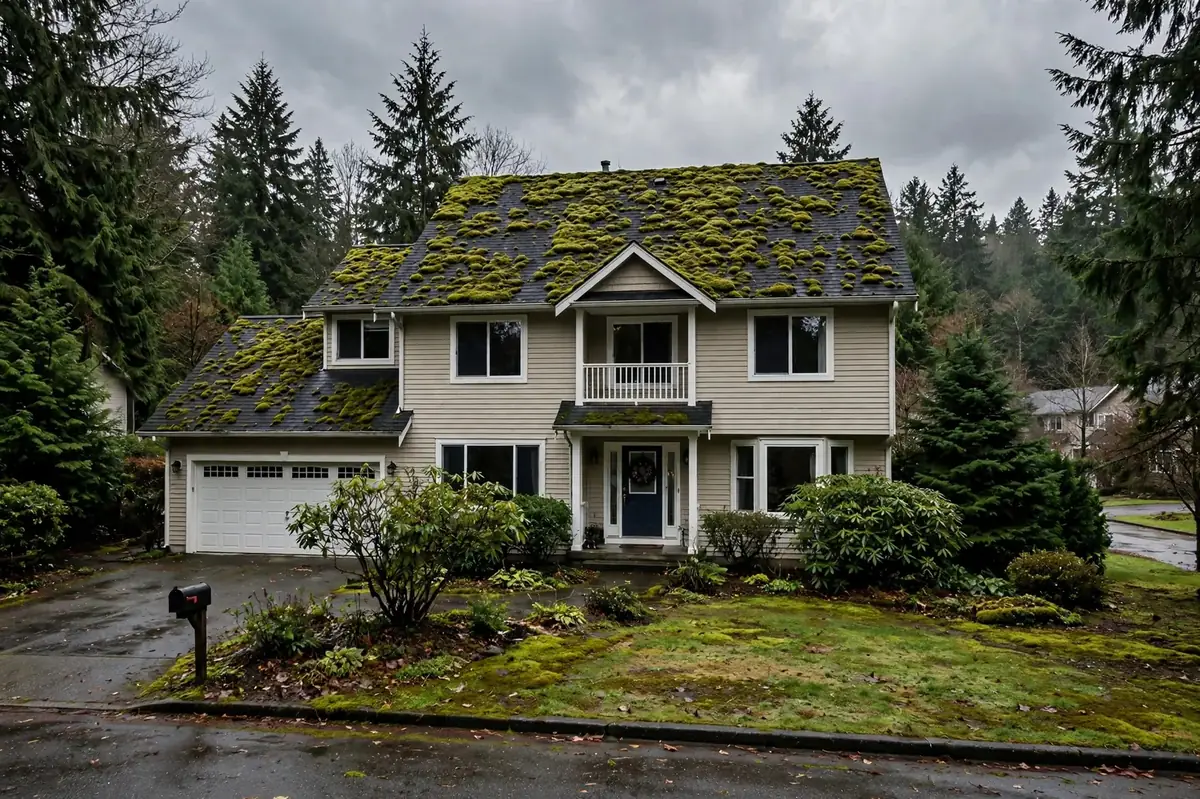
Yes, but cedar demands a gentler touch than asphalt shingles. Use careful manual removal plus low-pressure soft washing — never a pressure washer, which splinters shakes and voids manufacturer warranties. Always finish with a cedar-safe prevention treatment to slow regrowth.
Why Moss Loves Cedar (and Why That's Dangerous)
Asphalt shingles are inert — moss sits on them. Cedar is food — moss roots into it. On cedar, moss holds moisture directly against wood fibers, accelerating the exact processes that destroy shakes: curling, cupping, splitting, and rot. A mossy asphalt roof loses years; a mossy cedar roof can lose decades. Cedar also stays damp longer after rain, so the moss growing season is effectively year-round.
The Cedar Rules: What's Different
- No pressure washing — not even "low" pressure. Pressure shreds cedar's soft surface fibers, opening the wood to faster water absorption and faster moss return. On cedar this isn't a caution, it's a prohibition.
- Don't walk on the shakes. Cedar splits underfoot, especially older, thinner shakes. Proper cedar work is done from ridge anchors, ladders, or lift equipment — a cleaner who strolls across your cedar roof is breaking it.
- Hand brushing, then gentle soft wash. Established moss comes off with careful hand brushing along the grain, followed by a very low-pressure rinse with a wood-safe solution. Against the grain or across it tears fibers.
- Wood-safe treatment only. Standard harsh biocides can discolor or damage cedar. The treatment must be formulated for wood roofs — ask what product they use and whether it's cedar-rated.
- Preservative after cleaning. A penetrating wood preservative applied after cleaning is the cedar equivalent of prevention treatment on asphalt — it slows moisture absorption and buys years. Most companies skip this; on cedar it's close to essential.
How Often Does Cedar Need Treatment in Shoreline?
Every 1–2 years for treatment, with a visual check each fall. Cedar under fir cover on a north slope is the highest-maintenance roof in Shoreline — budget for it like you'd budget for exterior paint. The alternative is replacing shakes piecemeal, then the whole roof years early. A $15,000–$30,000 cedar roof justifies the maintenance math easily.
Signs Your Cedar Needs Attention Now
- Moss mats thick enough to hide the shake edges
- Shakes curling or cupping at the corners
- Soft, punky spots when prodded (rot starting)
- Heavy lichen colonization — means chronic dampness
- It's been 3+ years since any treatment
Curling and cupping are the point of no return for individual shakes — cleaning won't flatten them back. But catching it early and treating regularly keeps the rest of the roof sound for its full lifespan.