
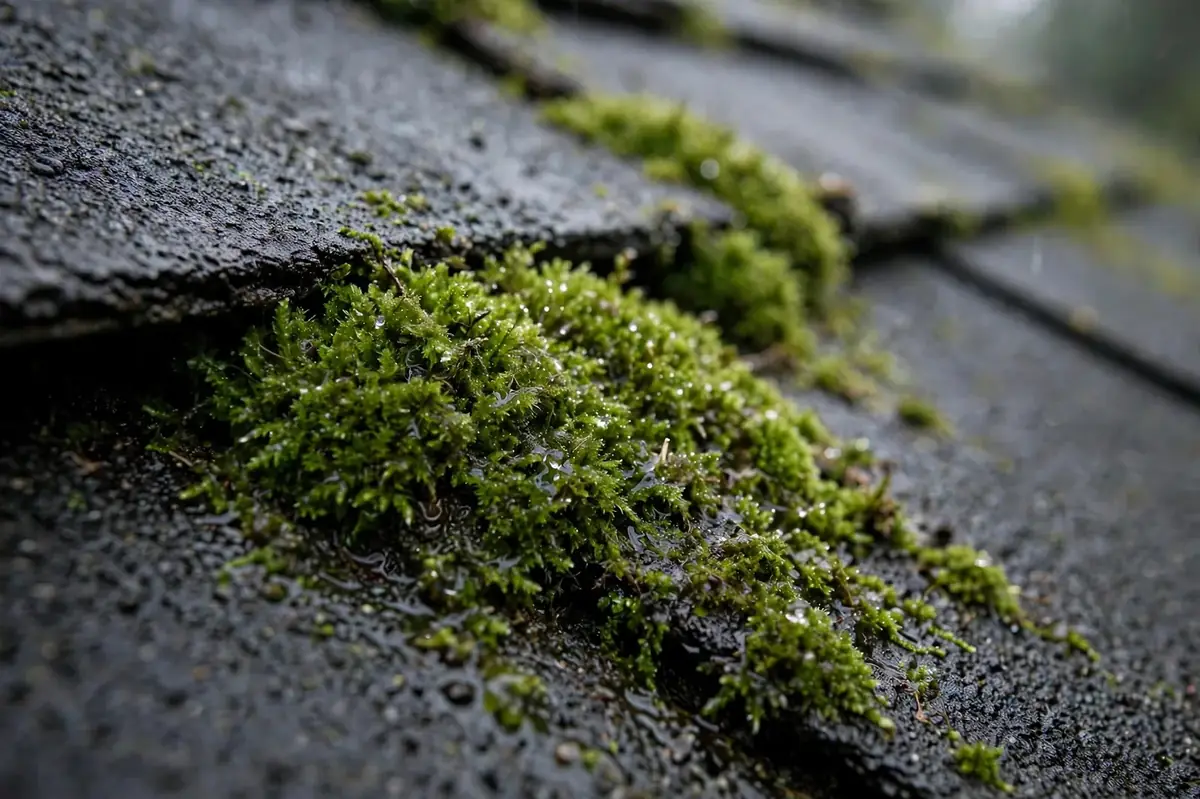
"We had it cleaned two years ago and it's already back — was it a waste of money?" We hear this constantly in Shoreline. Usually the cleaning wasn't a scam. It was just only half the job. Here are the five real reasons moss returns, in order of how often we see them.
1. Nobody Treated the Roof After Cleaning
This is the big one — the cause behind most regrowth. Manual removal and soft washing take off what's visible. But moss spreads by microscopic spores, and millions of them remain in the shingle texture after cleaning. A professional biocide treatment kills those spores and leaves a residual barrier. Skip it, and you've simply reset the clock: in Shoreline's climate, expect visible regrowth within 12–24 months.
Ask your last invoice what it says. If there's no treatment line item, you got a scrape-and-go — the industry's most common shortcut.
2. The Conditions Never Changed
Cleaning addresses what's already there. It doesn't change what produced it. Walk around your house and look for the moss factories:
- Tree shade: north-facing slopes under firs that never fully dry. Trimming back overhanging branches is the single most effective long-term move.
- Debris in valleys: needles and leaves trap moisture against shingles — moss starts exactly there.
- Poor drainage: clogged gutters keep the bottom roof edge damp for days after rain.
- Attic moisture: older Shoreline homes with weak ventilation grow condensation under the roof deck, feeding moss from below. Almost nobody checks this.
A company that cleans your roof without mentioning any of this isn't doing you a favor.
3. It Was Pressure Washed
Here's the cruel irony: pressure washing can make regrowth faster. High pressure strips the protective granules off asphalt shingles, leaving a rougher, more porous surface — which holds moisture better and gives moss spores more to grip. The roof looks fantastic for a month. Then it greens up worse than before, and you've traded a cleaning bill for a shorter roof life.
4. Only the Visible Moss Was Removed
Some "cleanings" are really just blow-offs: a leaf blower knocks the loose stuff off and the crew leaves. The moss mats' root structures (rhizoids) stay anchored under shingle edges, and the whole colony rebuilds from there. If your last cleaning took 45 minutes and cost $199, this is probably what happened.
5. The Treatment Was the Wrong Product — or Applied Wrong
Not all treatments are equal. Consumer spray products from the hardware store work slowly and wash off in the first heavy rain. Professional treatments need proper dilution, full coverage, and — critically — dry hours afterward to bond. A treatment applied the morning before a Shoreline downpour is money in the gutter, literally. Timing matters as much as chemistry.
The Question to Ask Next Time
Don't ask "how much to clean my roof?" Ask "what's your process for keeping it from coming back?" The answer tells you everything: if treatment, shade assessment, and a re-treatment policy are in the answer, you're talking to a real moss company. If the answer is just a price, keep looking.