
Moss Treatment & Prevention in Shoreline, WA
Cleaning moss without treating the roof is like mowing weeds without pulling roots — it all comes back. Our professional prevention treatment is the difference between a roof that stays clean for years and one that needs redoing every spring.
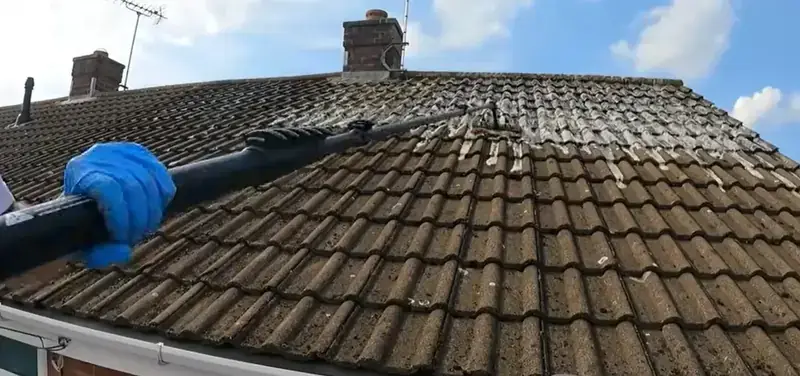
Why Treatment Matters More Than the Cleaning Itself
Here's what most Shoreline homeowners learn the expensive way: scraping or washing moss off is only half the job. Microscopic spores and root fragments remain embedded in the shingle surface. In our damp climate, they re-establish within 12–24 months — and you're paying for the same service again.
A professional biocide treatment changes that math. Applied after cleaning, it sterilizes the roof surface and creates a residual barrier that prevents spores from taking hold. Treated roofs in the Shoreline area typically stay clear for 2–3 years, even under tree shade.
How Our Prevention Treatment Works
- Applied to a freshly cleaned roof for maximum bond
- Kills remaining spores and root fragments on contact
- Leaves residual protection against new growth
- Safe for asphalt, cedar, tile, and metal roofing
- Landscaping protected before, during, and after application
- Effective for 2–3 years in Pacific Northwest conditions
What Extends (or Shortens) Your Results
Shade: heavy tree cover means faster regrowth — consider our annual maintenance plan.
Roof orientation: north-facing slopes always green up first; they're the section to watch.
Ventilation: poor attic ventilation keeps the roof deck damp from below, feeding growth.
Gutters: clogged gutters pool water at the eaves — the lowest rows of shingles suffer first. For hands-off scheduling, our maintenance plan reapplies treatment on time.
Why Shoreline Grows Moss Faster Than Almost Anywhere
It is not your imagination. The Seattle area gets around 150 days of measurable rain a year, and Shoreline adds Puget Sound humidity and some of the densest evergreen cover in the metro area. Roofs here stay damp for months, and damp plus shade is everything moss needs.
The worst cases cluster in predictable places: north-facing slopes that never see direct sun, homes tucked under Douglas firs in Innis Arden and Richmond Beach, and streets near Echo Lake where the tree canopy barely breaks. If your roof checks two of those boxes, prevention treatment is not optional. It is the only thing standing between you and a cleaning bill every other year.
When Treatment Works Best
Treatment needs a dry window to bond properly, which makes late spring through summer the ideal season in Shoreline. Applied during a dry stretch, the treatment soaks in and sets before the fall rains arrive. Winter applications are possible on dry days but less reliable, since persistent dampness and short daylight slow the bonding.
This is also why treatment and cleaning are scheduled together. A freshly cleaned roof in June, treated the same week, heads into the wet season with maximum protection. Timing the job right is part of the job. There is another reason professionals handle this: many treatment products require a dry roof for application, and a reliably dry roof is nearly mythical in the Pacific Northwest outside of summer. Part of what you are paying for is someone who knows how to read our weather windows.
Treatment Questions
Treatment is the second half of the job. See how it fits into our full roof moss removal service in Shoreline, from inspection and soft wash through to prevention.
Stop Paying for the Same Job Twice
Cleaning + prevention treatment, one visit, years of results.
📞 Call (206) 864-5935