
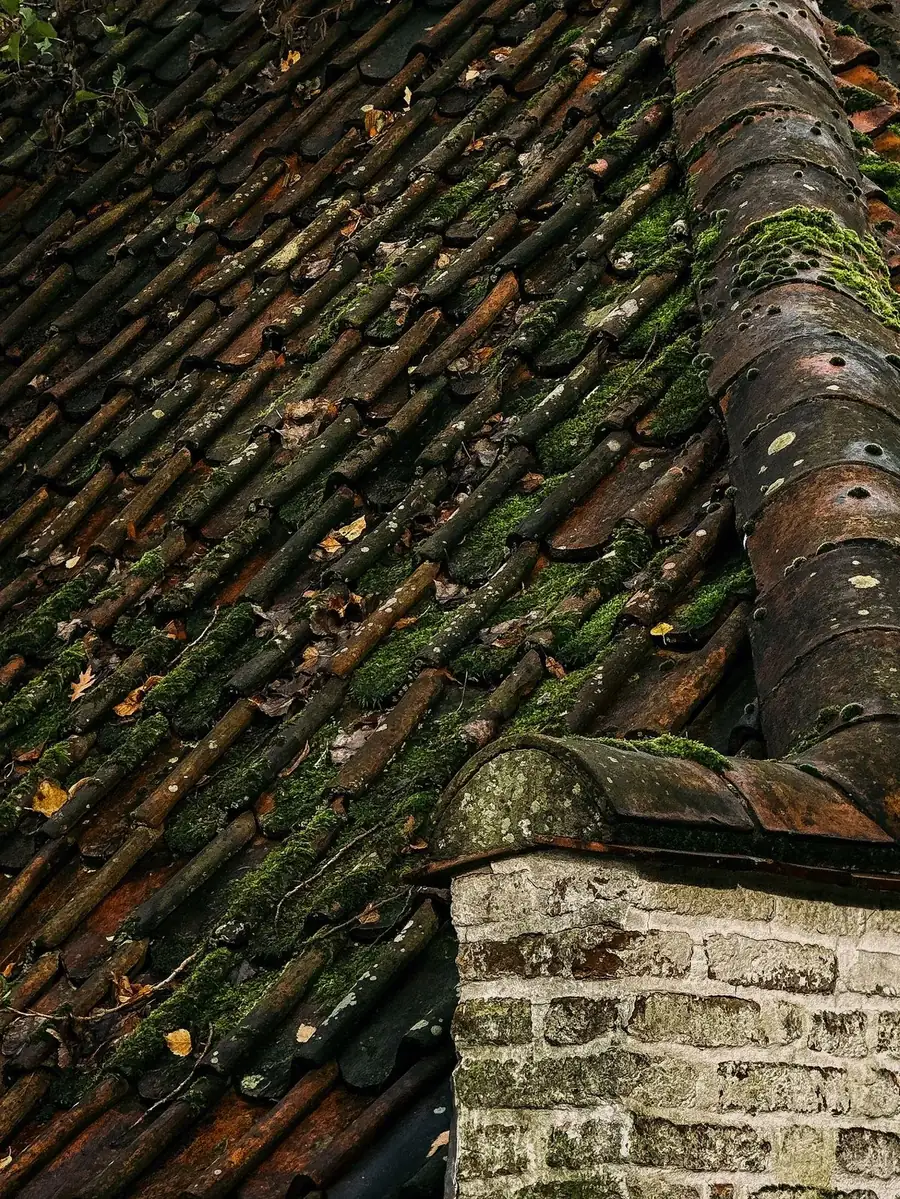
Ask five people whether roof moss causes real damage and you'll get five different answers. Roofing companies say yes (they sell the fix). Some homeowners say their mossy roof lasted 30 years. So who's right? Both — because it depends on how much moss, what kind of roof, and how long it's been there.
How Moss Damages a Roof (the Actual Mechanisms)
Moss doesn't eat shingles. It damages them mechanically, in three ways:
- Lifting: moss roots (rhizoids) grow under shingle edges and pry them upward. Once lifted, wind drives rain underneath — that's where leaks begin.
- Moisture trapping: a moss mat holds water against the roof surface like a sponge. The deck underneath stays damp for months, inviting rot.
- Freeze-thaw: waterlogged shingles go through winter freeze cycles. Water expands when it freezes, cracking and splitting the shingle — Shoreline's damp winters are ideal for this slow destruction.
When Moss Is Just Cosmetic
A light green tint on a north-facing slope — the kind you notice but can't grab a handful of — is mostly a cosmetic issue. It hasn't developed the root structure to lift shingles yet. This is actually the best time to treat: a simple prevention treatment now avoids an expensive removal later.
When Moss Is Actively Destructive
Thick, spongy mats you can peel up with your fingers. Moss growing in valleys where water should flow. Shingle edges visibly curling. Granules washing into gutters. At this stage, damage is happening — the only question is how far it's gone. This is also the stage where removal itself needs care: pulling heavy moss off a compromised roof can expose problems that were hiding underneath.
The "Leave It Alone" Argument
You'll find people online calling moss removal a scam — "just leave it, it's natural." There's a grain of truth: a thin layer of moss on a healthy roof isn't an emergency. But "leave it alone" applied to thick, established moss in Shoreline's climate is how $500 maintenance turns into a $15,000 roof replacement. The honest position is in the middle: monitor light growth, treat early, remove what's established.
What Shortens Roof Life Most
It's not the moss alone — it's the combination: moss + trapped moisture + freeze-thaw + time. A West Coast homeowner put it well: moss is "a good way to get a roof to last significantly less than 20 years." Asphalt shingles rated for 25–30 years routinely die at 15–18 under heavy, untreated moss in the Pacific Northwest.
Quick Answers
Can moss cause a roof leak?
Yes — moss roots lift shingle edges, letting wind-driven rain underneath, and trapped moisture rots the deck. It's one of the most common slow causes of leaks we see on Shoreline roofs.
How fast does moss damage a roof?
Light surface moss takes years to cause harm. Thick mats in our wet climate can shorten a 25-year shingle roof to 15–18 years. The damage is slow until it isn't — by the time shingles curl, it's been happening a while.
Will removing heavy moss damage my roof further?
Done wrong, yes — ripping heavy moss off brittle shingles can tear them. That's why we hand-brush carefully and never pressure wash. Gentle removal plus an inspection is the safe path.
Find Out Your Roof's Real Condition
Free inspection. Honest assessment — cosmetic or concerning, we'll tell you straight.
📞 Call (206) 555-0199