
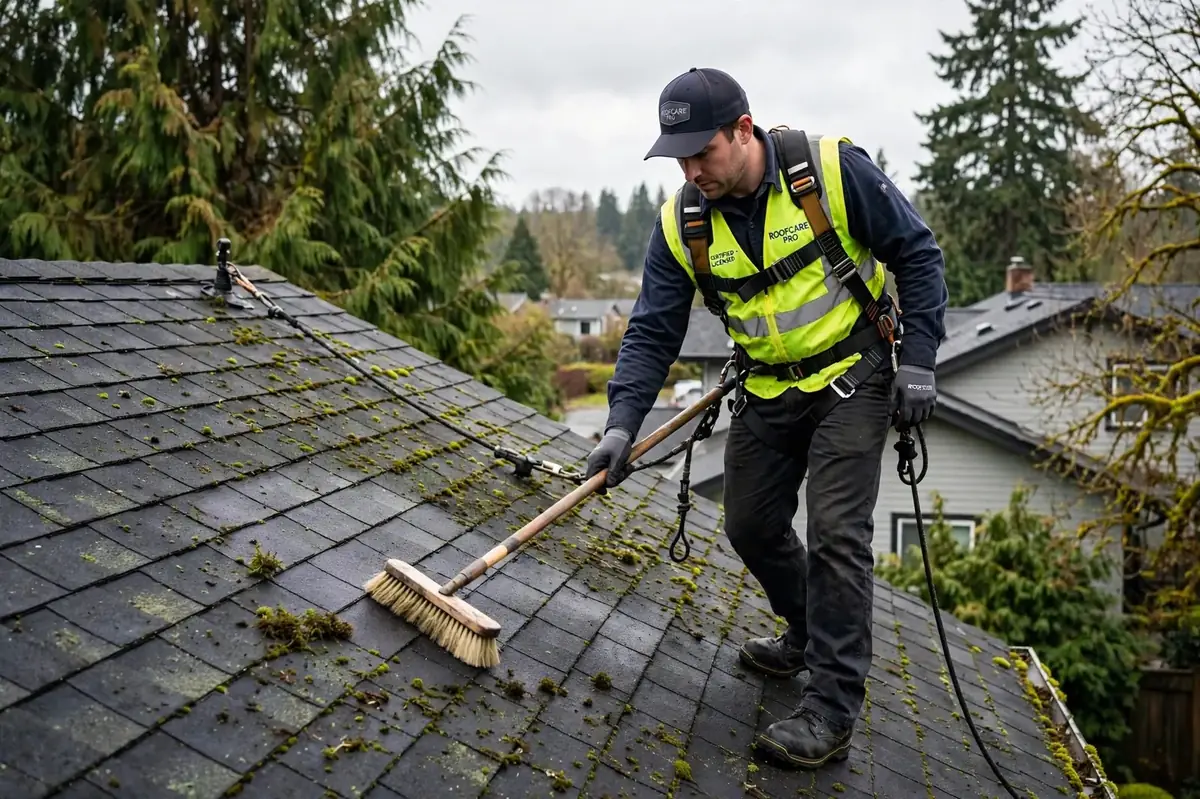
Most roof damage from moss removal isn't caused by the moss — it's caused by the removal. Pressure washers, metal scrapers, and aggressive brushing destroy more Shoreline shingles every year than the moss itself. Here's the method that actually works without hurting your roof.
What Is the Safest Way to Remove Roof Moss?
Hand removal followed by soft washing. Brush thick moss mats off gently with a soft-bristle brush — always brushing downward, never upward against the shingle edge — then treat the roof with a low-pressure cleaning solution that kills remaining moss, algae, and lichen at the root. This is the method shingle manufacturers recommend, and the one we use on every job in Shoreline.
What Tools Do You Need to Remove Roof Moss?
- Soft-bristle brush or broom — the only thing that should touch your shingles.
- Pump sprayer — for applying moss treatment evenly.
- Biodegradable moss treatment — kills roots and spores, not just the visible green.
- Garden hose — low pressure only, for rinsing.
- Ladder stabilizer and safety gear — non-negotiable on any slope.
- Tarp — to protect landscaping below the eaves.
What Should You Never Do to a Mossy Roof?
- Never pressure wash asphalt shingles. High pressure strips the protective granules and can void your manufacturer warranty.
- Never scrape with metal tools. Putty knives and wire brushes gouge shingles and open paths for water.
- Never brush upward. Brushing against the shingle edge lifts tabs and breaks the seal.
- Never walk on a wet, mossy roof. It's slicker than it looks — most DIY roofing injuries happen here.
- Never skip the treatment. Removal without prevention means doing the whole job again next year.
Should You DIY or Hire a Professional?
Be honest about your roof. Light, early-stage moss on a single-story, walkable roof? DIY with the method above works fine. Thick established mats, a steep pitch, multiple stories, or a cedar shake roof? That's pro territory — the equipment, safety setup, and experience pay for themselves the first time a DIY job goes wrong. Our roof moss removal service includes everything above plus gutter cleaning and a free inspection.
What Happens After the Moss Is Gone?
Removal is only half the job. A prevention treatment keeps spores from re-establishing, and clean gutters keep dislodged moss from blocking your drainage. In Shoreline's climate, plan on a treatment every 1–2 years — or put it on autopilot with our maintenance plan.
Quick Answers
How long does it take moss to come back after removal?
Without treatment, 1–2 years in Shoreline's damp climate. With professional prevention treatment, 2–4 years of clear roof is typical — which is why the treatment step matters more than the removal itself.
Will dead moss fall off the roof by itself?
Mostly, yes — after a soft wash kills it, dead moss browns and weathers off over several weeks. We physically remove heavy mats during the visit so you're not waiting months for the worst of it.
Is it safe to walk on my roof to remove moss?
Moss is slippery when wet and shingles are fragile underfoot — most DIY injuries happen here. If you go up, wear soft-soled shoes, stay on dry sections, and never work alone. Steep or high roofs: call a pro.
Want It Done Without the Risk?
Free inspection. Soft wash only. Prevention included.
📞 Call (206) 555-0199