
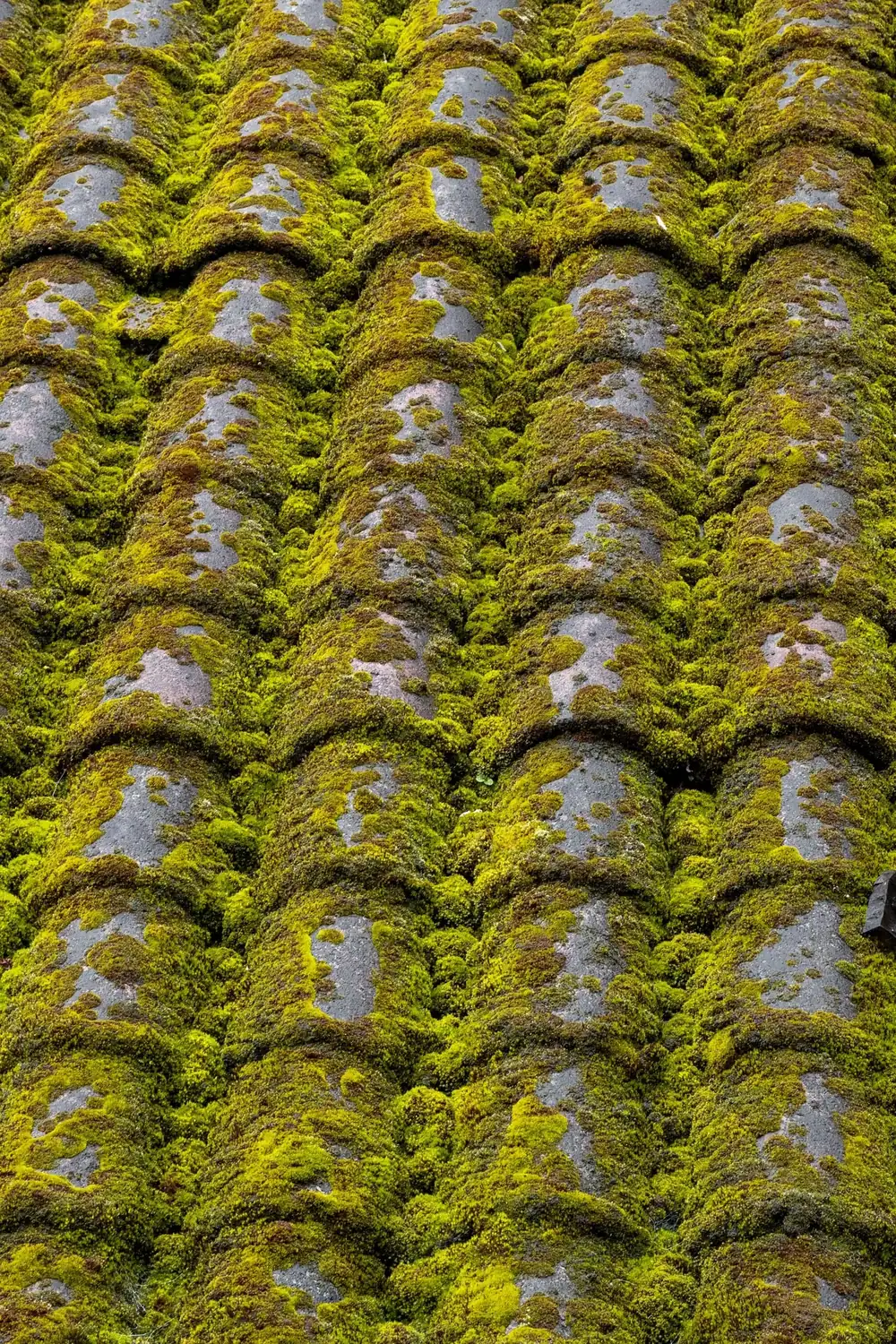
Zinc strips are one of the most searched — and most oversold — roof moss products. Installers market them as a permanent, maintenance-free moss solution. Homeowners in moss-heavy areas like Shoreline then wonder why moss is growing happily a few feet below their brand-new strips. Here's what's actually going on.
How They're Supposed to Work
Metal strips (zinc or copper) are installed near the roof ridge. When it rains, water flows over the metal, picks up trace metal ions, and carries them down the slope. These ions are toxic to moss and algae, creating a "kill zone" below the strip. The science is legitimate — zinc and copper genuinely inhibit moss growth.
Where They Fall Short
The problem is range. The ion concentration drops quickly with distance, so the effective zone is typically only a few feet below each strip. On a long Shoreline roof slope, that leaves most of the roof unprotected. Pacific Northwest roof cleaners consistently report moss thriving just feet below installed strips — our rain is frequent enough to wash ions away faster than they accumulate, and our moss pressure is among the highest in the country.
Additional limits worth knowing:
- They don't work on existing moss. Strips prevent new growth; they won't kill an established mat. Installing them over a mossy roof is wasted money.
- Effectiveness fades. As the exposed metal oxidizes over 3–5 years, ion release drops off.
- Installation quality matters. Face-nailing strips through shingle faces creates leak-prone holes. Proper installation tucks strips under a shingle course with sealed fasteners — or better, goes in during a re-roof under the ridge cap.
Zinc vs. Copper
Zinc is the standard: affordable, widely available, moderately effective. Copper releases more potent ions and works better, but costs significantly more. For most Shoreline homes, zinc is the reasonable choice if you're installing strips at all — copper makes sense mainly on high-value roofs or severe shade situations where every bit of help counts.
When Strips Are Worth It
Strips make sense as a supplement — installed on a freshly cleaned and professionally treated roof, where they add a little extra suppression near the ridge. They're also sensible during a re-roof, when installation is clean and cheap. What they are not: a standalone solution, a substitute for treatment, or a reason to skip maintenance.
What Works Better
A professional biocide treatment after cleaning protects the entire roof surface for 2–3 years — no range limitations, no fading metal. For ongoing protection, a maintenance plan with scheduled re-treatment beats strips on every measure except "install and forget," which strips don't actually deliver either.
Quick Answers
How long do zinc strips last?
Quality zinc strips last 15–20 years — the metal itself is durable. But their moss-slowing effect weakens with distance from the strip, so lower roof sections still need treatment.
Can I install zinc strips myself?
You can, but placement matters: they must sit at the ridge under the top shingle course to work. Poorly installed strips slide, look bad, and do nothing. We install them as part of a prevention visit.
Are copper strips better than zinc?
Copper is more effective per inch but costs significantly more and can stain light-colored roofs green-blue over time. For most Shoreline homes, zinc is the practical choice.
Want Prevention That Actually Covers Your Whole Roof?
Professional treatment + honest advice about supplements like strips.
📞 Call (206) 555-0199